Temperature–Humidity Controller Selection, Solved: 5 Questions and a 3-Step Method


Why Panel Climate Control Fails More Often on the Drawing Than in the Field
Temperature–humidity controllers look simple, but many problems start at the selection stage:
SCADA needs data, but the device has no RS-485.
The cabinet needs separate heater and fan control, but there is only one output contact.
A high-humidity panel gets only temperature control, so condensation alarms never stop.
Two sensor points are required (top/bottom, two zones), but the controller only supports one probe.
Instead of fixing this later with rework and add-on relays, it is far better to make selection a structured engineering step: write the requirement once, translate it into configuration, then choose the product.

Step 0 – Answer 5 Questions Before You Touch a Part Number
Before picking any type code, answer these five points explicitly in the spec or datasheet:
Back-end integration
Number of controlled loads
Control target
Supply and installation
Sensor count and placement
Once these five are nailed down, selection is no longer guesswork.
3-Step Selection Method: Connect “Requirement → Configuration → Model”
Step 1 – Decide on Communications
No back-end integration
SCADA / remote monitoring required
This avoids adding “protocol converters” or changing devices after the PLC/SCADA design is frozen.
Step 2 – Decide Number of Outputs and Sensors
Outputs (load control channels)
Single strategy / single load
Heater + fan split control, or two heating zones
Sensors (measurement inputs)
Single-point measurement
Two-point / two-zone measurement
Confirm this at selection stage; it cannot be “added later” by wiring alone.
Step 3 – Define Control Objective and Strategy
Anti-condensation focus (temperature only)
Objective: keep cabinet above dew-point risk region.
Use temperature-only controllers with:
This is appropriate where humidity is moderate and enclosure sealing is good.
High-humidity or outdoor cabinets (temperature + humidity)
Objective: manage both temperature and relative humidity.
Use integrated temperature–humidity controllers with:
Also define:
Sensor location (avoid doors, vents, direct heater airflow)
Enclosure sealing requirements (door gaskets, cable glands, condensation paths)
A good control strategy still fails if the probe is placed in the wrong micro-environment.
From Requirement to Product Family: Mapping the Choices
Below is a practical mapping between typical requirements and ODES product families:
Local indication and local control only (no RS-485)
Back-end data acquisition / remote alarm display required (RS-485)
Two-zone control / two temperature–humidity channels
Only one heater or one fan
Heater + fan split control, or dual-zone heating
Temperature-only anti-condensation (stability first)
Temperature and humidity management (high-humidity strategy)
Legacy systems requiring analogue retransmission
This mapping turns “we need panel climate control” into specific model families tied to functions and interfaces.
Make the Deliverable Specification Complete Once
To avoid rework later, treat the temperature–humidity controller spec like any other engineered device. Include:
Communications
Sensors
Outputs
Control functions
Installation and auxiliary supply
Once these five items are written clearly, selection becomes a lookup exercise, not a negotiation during commissioning.
Conclusion: Treat the Controller as an Engineered Function Block, Not an Accessory
Different switchgear and control cabinets place different demands on panel climate: some only need temperature anti-condensation control, others require tight humidity management and SCADA integration, and some need zoned control with multiple sensors.
By:
Asking five structured questions up front,
Using a 3-step selection method (communications → outputs/sensors → control strategy), and
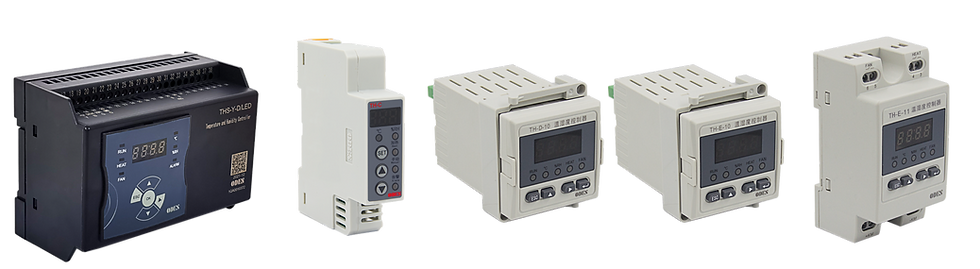
Mapping requirements to specific product families (TH-E, TH-B, THS-Y, TH2-B, THS2-Y, T-E),
you can specify temperature–humidity controllers that are fit for purpose on day one, minimise rework, and keep panel climate control as reliable as the protection and control circuits it supports.
If you are standardising panel climate control across multiple projects or stations, ODES can help you consult on controller architectures, request a one-page “selection matrix” (communications × outputs × strategy × installation), and learn how to formalise temperature–humidity controller requirements in your design standards.
To contact our engineering team for technical documentation or project support, please write to:
You can also learn more about ODES temperature–humidity controllers and related panel climate products at https://www.odes-electric.com/sales-page.

#panelclimate #temperaturecontroller #humiditycontrol #TH_E #TH_B #THS_Y #switchgear #controlcabinet #SCADA #IECstandards #powerautomation #auxiliarydevices #ODES


Comments